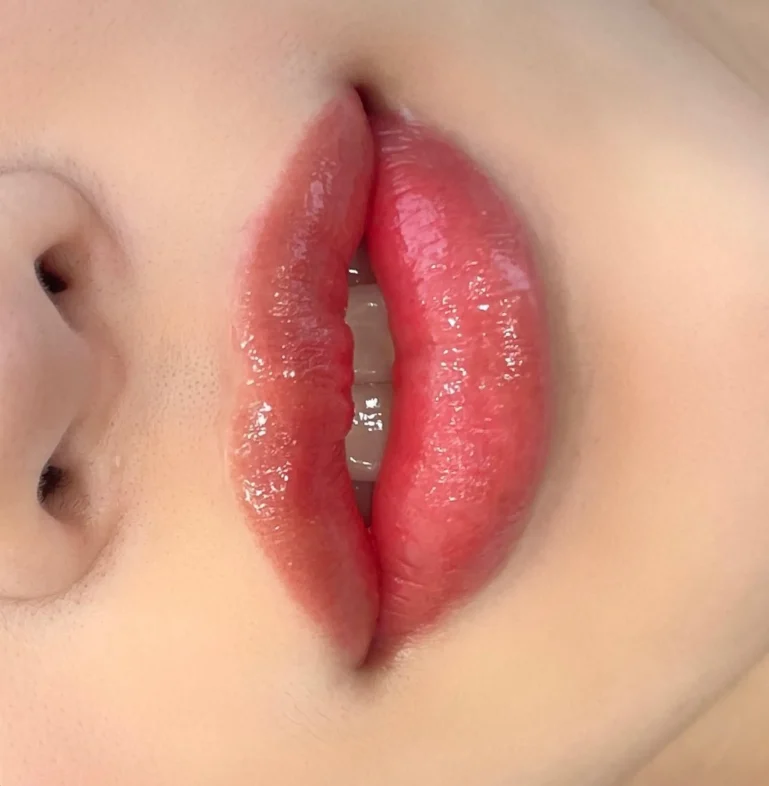
So you’re asking, “Do lip tattoos hurt a lot?” Well, you’re not alone — it’s one of the most common (and totally valid) questions we get in studio. The short answer? Yes, there is some pain involved. But before you go picturing medieval torture tools, let’s break it down honestly.
Lip tattooing (also known as lip blush, lip blushing, lip blush tattooing or cosmetic tattooing) is a form of semi-permanent makeup that uses pigment and a tattoo gun or cosmetic tattoo gun to add long-lasting colour to your lips. Because the lip area is packed with nerve endings and has delicate skin, yep, they’re more sensitive than, say, your brows or other bony areas.
But with the right tattoo artist, good topical anaesthetic (or topical anesthetics if you prefer US spelling), sterile disposable needles and a pain-aware approach, it’s totally manageable for most clients. Let’s go through exactly what it feels like, how long it lasts, what affects the pain levels and how to prep your lips so you’re not white knuckling the appointment.
Contents
What lip tattoo pain feels like
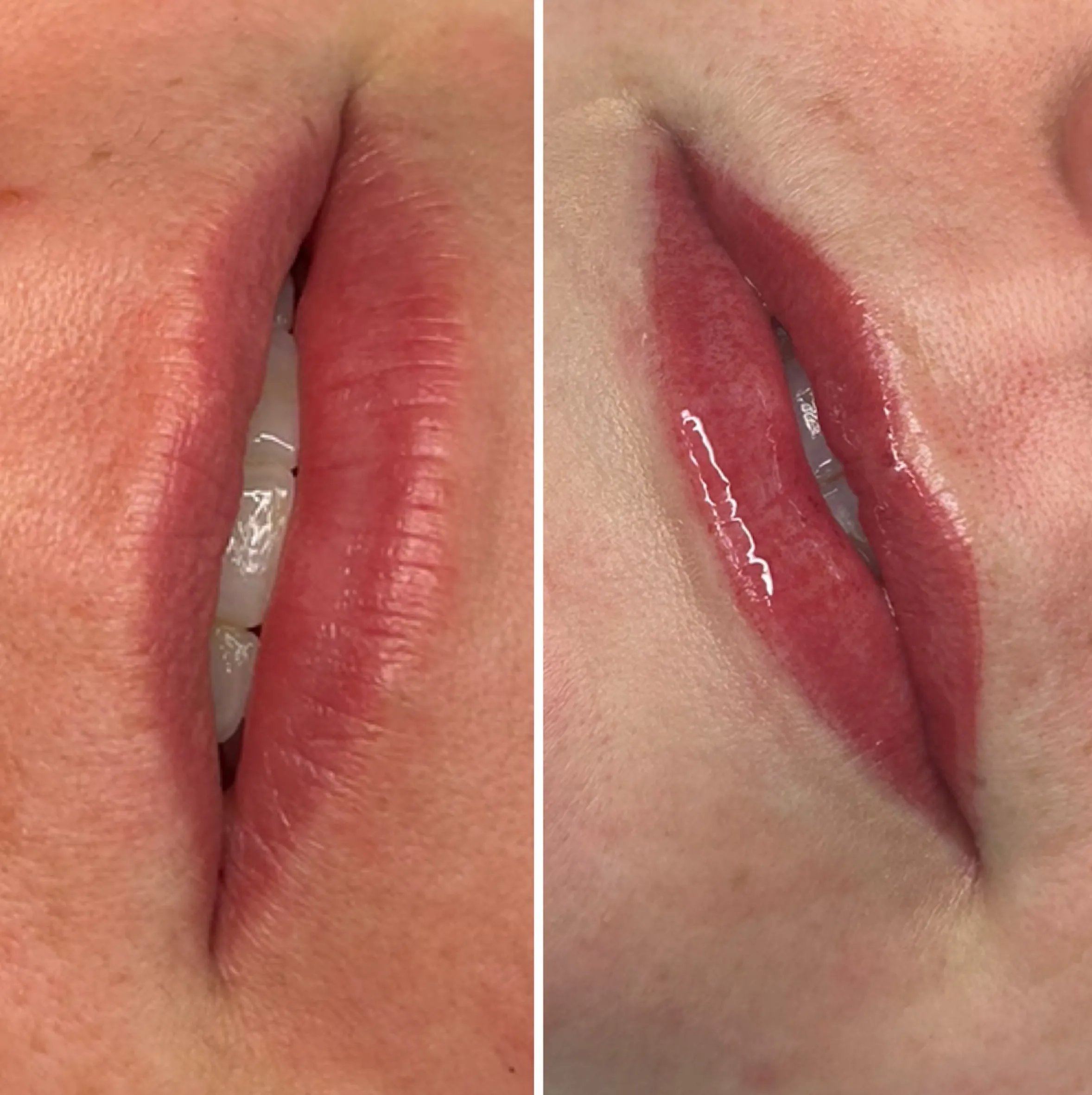
Pain is subjective, sure. But there are some common experiences that most clients report during a Lip Blush Tattooing or lipstick tattoo procedure:
- A light scratching or buzzing sensation from the tattoo needles
- Tingling or mild stinging around the lip line
- Sensitivity around the cupid’s bow and lip shape
- Occasional “zings” if the tattoo numbing cream wears off (we top it up if needed)
Most describe it as more annoying than unbearable — like a tiny electric toothbrush on your lips. If you’ve had eyebrow feathering, semi-permanent tattoo eyeliner or laser hair removal before, this tends to be less intense.
Quick pain comparison chart
| Treatment | Average Pain Rating (out of 10) |
|---|---|
| Eyebrow tattooing | 2–4 |
| Lip tattooing | 4–7 |
| Brazilian waxing | 7–9 |
| Laser hair removal (bikini) | 6–8 |
Your pain rating on the tattoo pain scale may vary depending on your skin sensitivity, stress levels, nervous sweat, pain tolerance and how well you’ve prepped (more on that below).
What affects the pain?
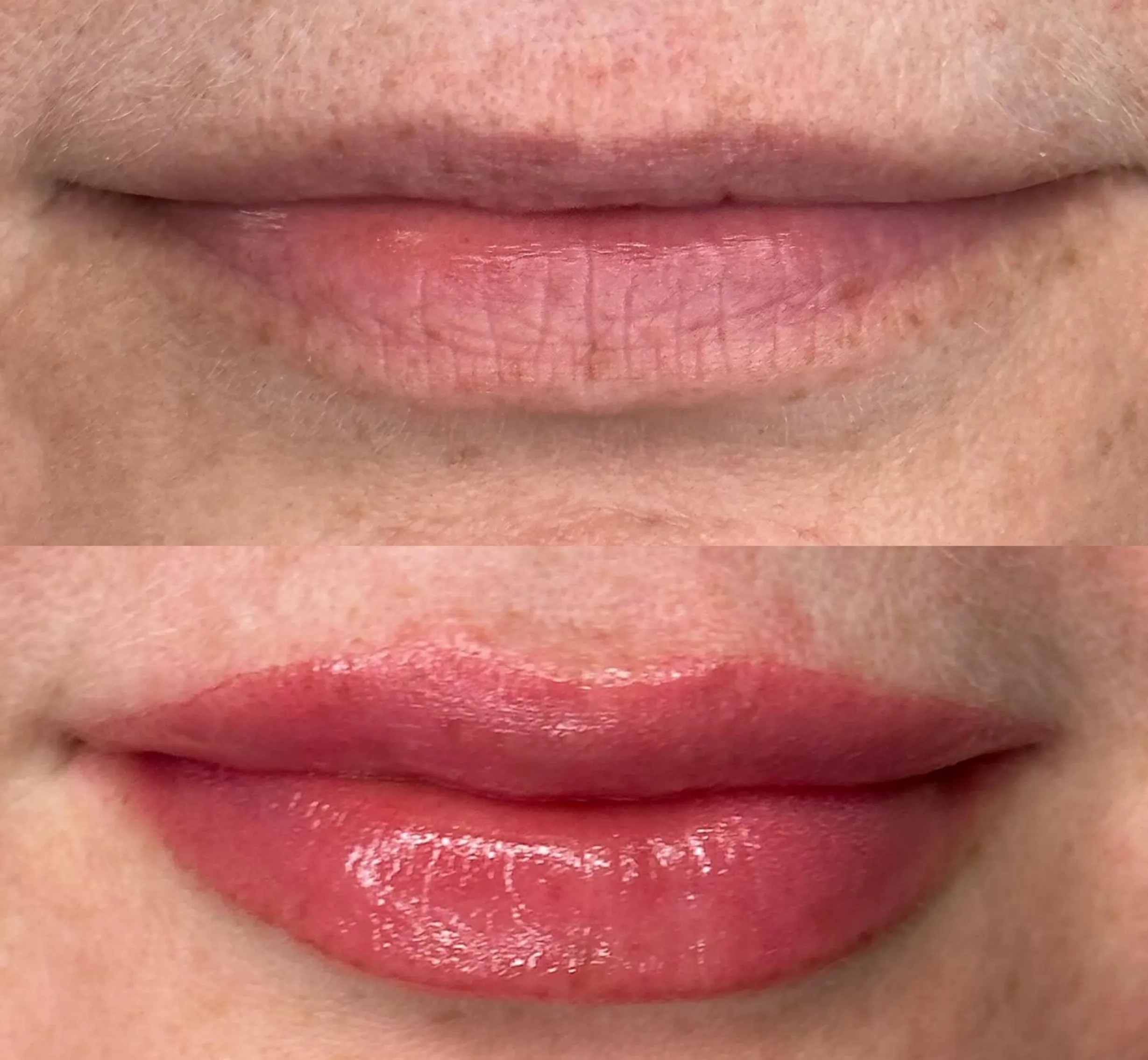
Every client is different, but here are the top factors that affect pain during a lip tattoo:
- Your pain tolerance
Some of us can sit through dental work without a flinch. Others feel faint getting a paper cut. Be honest about how you normally cope with pain so your tattoo artist can tailor numbing and breaks. - Menstrual cycle
Increased sensitivity before and during your period is real. We always recommend booking outside that window if possible. - The skill of your tattoo artist
A trained, experienced cosmetic tattooist will work gently, efficiently and know how to minimise discomfort. Heavy-handed or rushed work? That’ll sting more. Ask about training, technique, hygiene protocols and equipment like the tattoo gun used. - Numbing products used
Topical anaesthetic makes a huge difference. We apply a pre-numb (Zensa Numbing Cream is a favourite) and top up numbing gel throughout. Some tattoo shops skip this or use weaker formulas — not ideal. Always ask what’s used and if it’s TGA-approved. - The condition of your lips
Cracked, sunburnt, dehydrated skin is more sensitive. Heal your lips first and keep them smooth for better ink settling and pigment retention. - How hydrated you are
Dehydration increases discomfort. Drink water in the days leading up and avoid alcohol and caffeine (which dry you out and stimulate the nervous system). - Tattoo placement
Inner lip tattoos are a different beast entirely — they come with higher pain due to constant movement and oral microbiome disruption. Lip liner and full Lip Blush tattoos hurt less but still require proper prep.
How can it be made more comfortable?
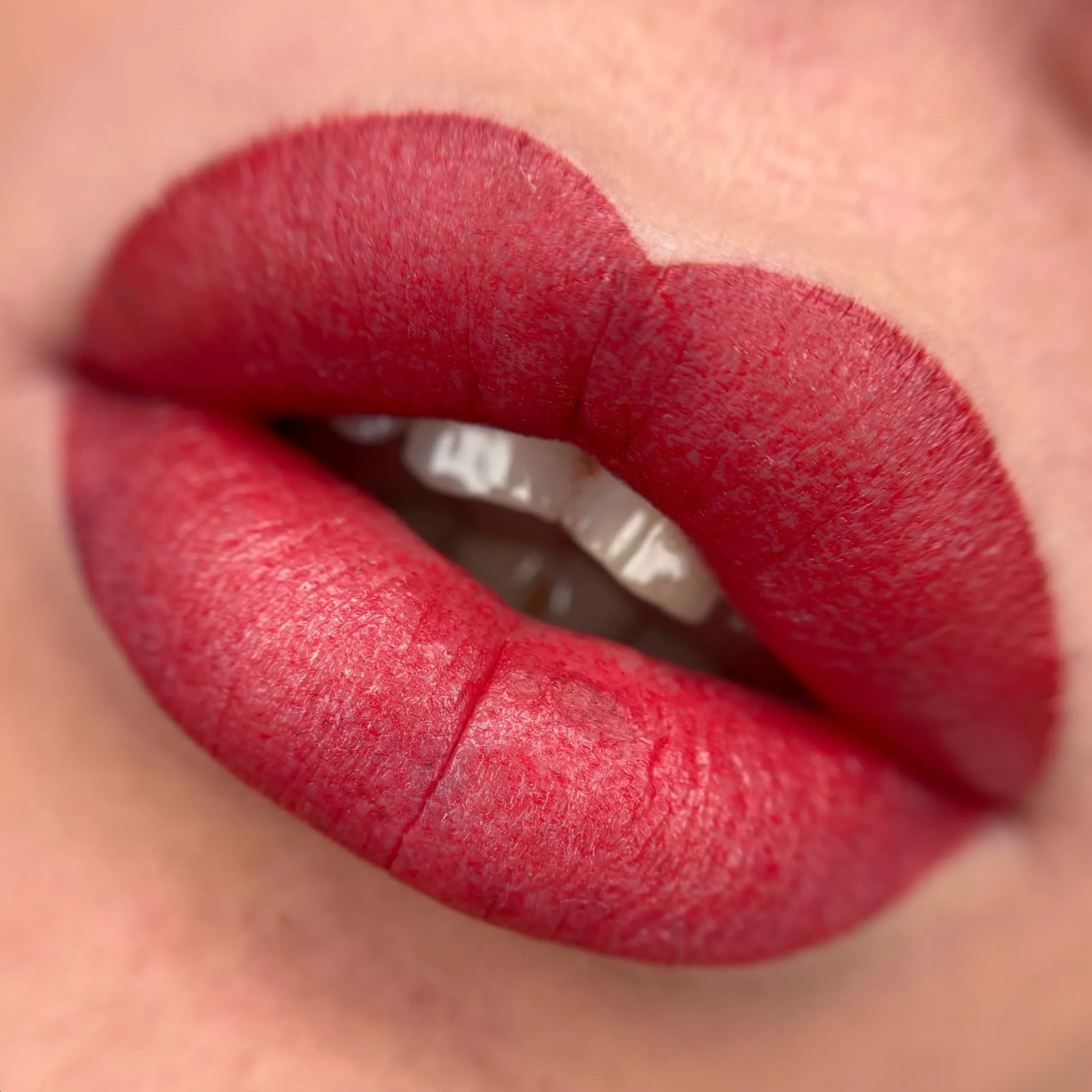
If you’re after subtle correction rather than full colour, a lip neutralization session can help balance darker tones or uneven pigment before a full cosmetic lip tattoo.
Here’s what we recommend to every client in Melbourne who books in for a Lip Blushing tattoo:
- Use a lip scrub and balm daily for 3-5 days prior (hydrated skin = better cell turnover)
- Avoid caffeine and alcohol for 24 hours beforehand
- Stay well-hydrated* Eat before (you won’t eat much after)
- Tell us about any lip fillers, lip augmentation or sensitivities in your consult
- Ask about numbing — confirm pre-numb and secondary anesthetics are used
What if it hurts too much?
You’re in control.
If it gets too uncomfortable, your tattoo artist will pause, reapply numbing, or even break the session into two. Some clients with super sensitive skin, certain medical conditions or high anxiety prefer that. No biggie.
Healing pain: What to expect after lip blush
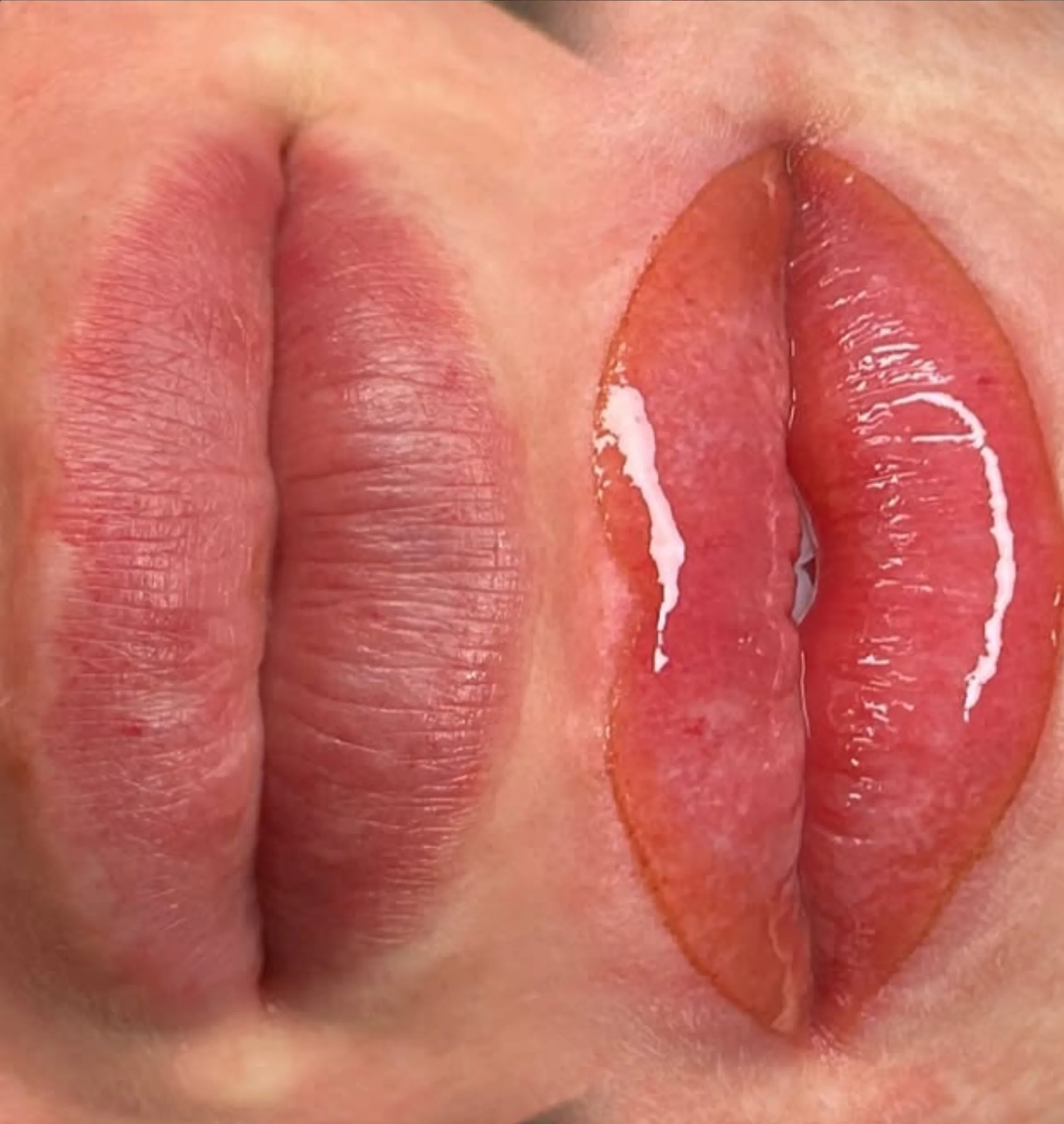
Lip blush healing is more about managing irritation and dryness than pain. Here’s the timeline:
- Day 1–3: Lips feel swollen, tight and tender. Like a sunburn. Avoid spicy food, mouthwash with alcohol and heavy kissing. Use gauze pads to blot and apply healing balm as directed.
- Day 4–7: Flaking begins. Itching and dryness are common. Don’t pick! Let wound healing happen naturally. Use cotton buds to apply ointment gently.
- Week 2–3: Lips may look too light — that’s normal ink settling. The colour comes back.
- Week 4–6: Fully healed. The final result reveals itself.
Note: If you get cold sores, take antiviral tablets (as prescribed) before and after the appointment to reduce the risk of outbreaks. Lip trauma (from tattoo needles) can trigger dormant herpes simplex virus.
Is tattooing worth the pain?
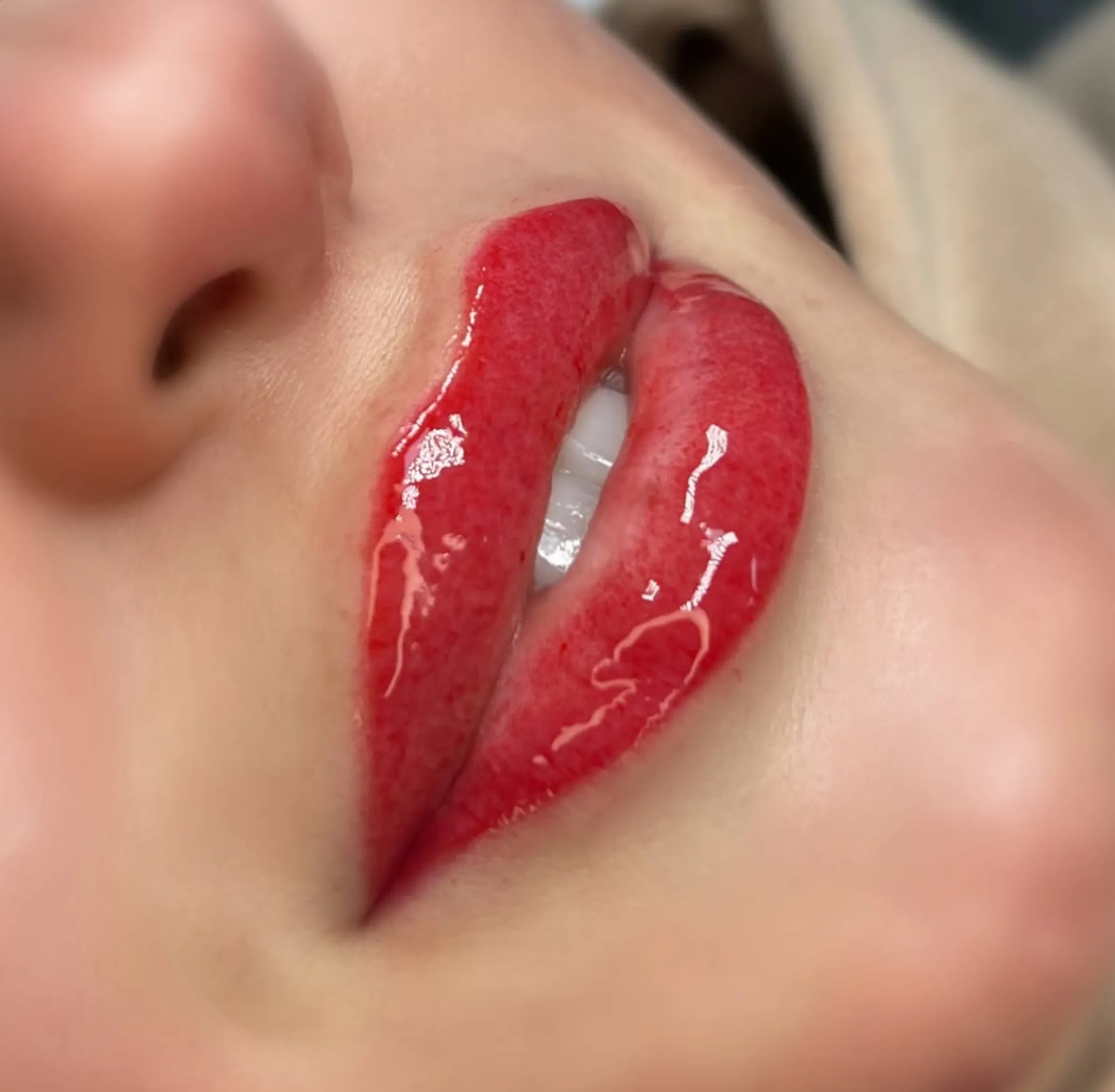
For many, yes.
If you’re sick of reapplying lip liner or tint, want to neutralise discolouration (lip neutralization), are curious about a lip liner tattoo for subtle definition or want fuller-looking lips without filler, a lip tattoo gives semi-permanent results with minimal maintenance. With proper care and sun exposure management, results can last 2–3 years.
Clients who follow prep and aftercare almost always say the pain was way less than expected. The biggest fear? Not pain — but the unknown.
The verdict from a Melbourne studio
If you’re considering lip blush in Melbourne, you’re not alone. Clients are ditching the daily lipstick routine for a longer-lasting tint that suits their undertone.
At our Cosmetic Tattoo Studio Face Figurati in Melbourne, we’ve worked on every skin tone and lip shape imaginable. Lip blush clients come in nervous and leave saying, “It wasn’t that bad.”
We use sterile tools, cosmetic tattoo gun technology, and pain-conscious methods and have seen a steady rise in clients getting lip blushing in Melbourne as part of their semi-permanent makeup routines, and infection prevention protocols to reduce risks of tattoo healing issues, blood-borne illnesses (like hepatitis B and C), and unnecessary discomfort.
FAQ
Is lip tattooing more painful than eyebrow tattooing?
Yes. Lips have more nerve endings than the brow, so most clients rate lip tattoos 1–3 points higher on the tattoo pain scale.
Can I take painkillers before my appointment?
Avoid ibuprofen and aspirin (they thin the blood). Panadol is okay if your doctor approves.
Will numbing cream make it completely painless?
No, but it dulls the sting. You’ll feel a vibration, not sharp pain.
What if I get cold sores?
Start antiviral tablets 2 days before and continue 2 days after. Trauma from tattooing can awaken dormant HSV.
What should I avoid post-treatment?
Skip sun exposure, spicy food, smoking, alcohol-based or antibacterial mouthwash, kissing and gym sweat for 48–72 hours. Let your lips recover in peace.
