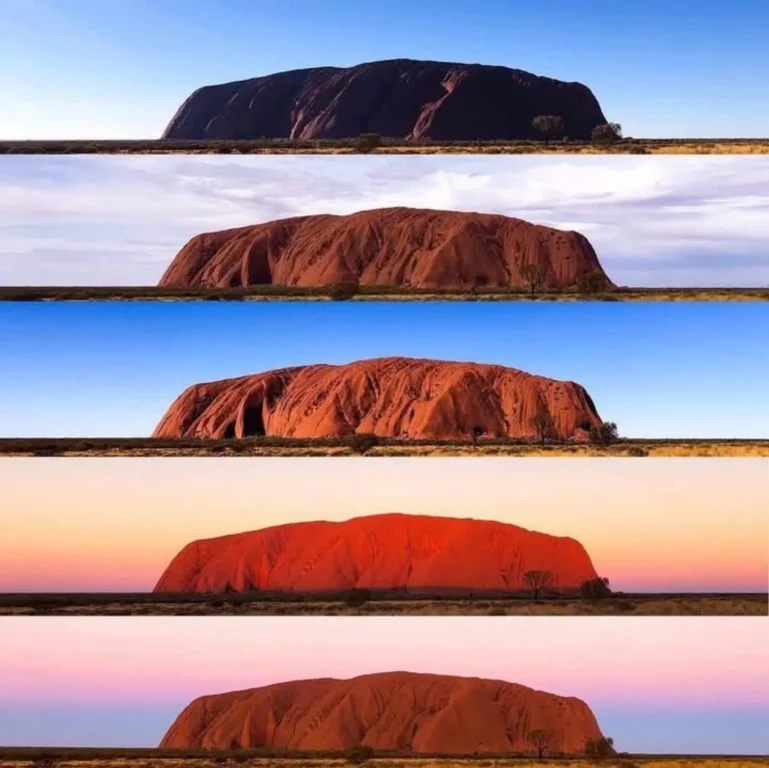
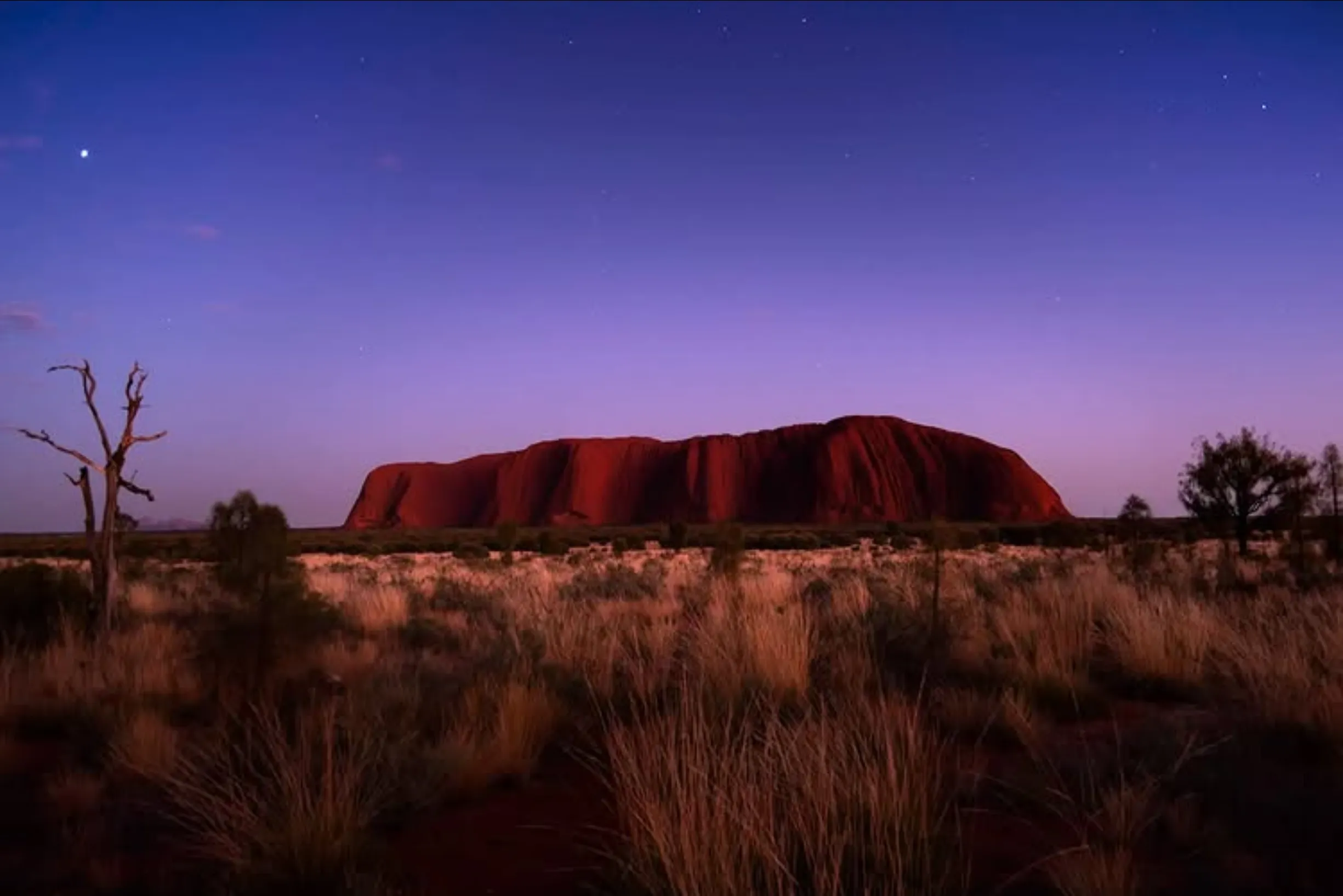
If you’ve only seen Uluru on a postcard or in a travel brochure, you probably think it’s a big red rock. And look — that’s not entirely wrong. But if you’ve actually stood at the base of it as the light shifts across the desert, you’ll know: Uluru doesn’t have a colour. It has hundreds.
In the early morning, it might be a soft dusty pink. By mid-afternoon, it’s baking orange, like the dirt’s turned molten. Then, just before sunset, it explodes into deep rust, ochre, sometimes even violet if the clouds get in on the drama. It’s one of the reasons I always tell travellers to slow down when they visit — because Uluru’s colour show is worth every quiet minute.
So let’s dig into why Uluru changes colour, what you can actually expect to see (beyond the Instagram filters), and how to plan your trip around this ever-shifting spectacle. If you’re planning a longer Top End itinerary, it also pairs beautifully with side trips to Kings Canyon, Kata Tjuta, or even a few days in Alice Springs to soak up some Outback art and culture.
Contents
Colour Changes Uncovered
Alright, we’re not cracking open a textbook here, but it helps to understand a few basics.
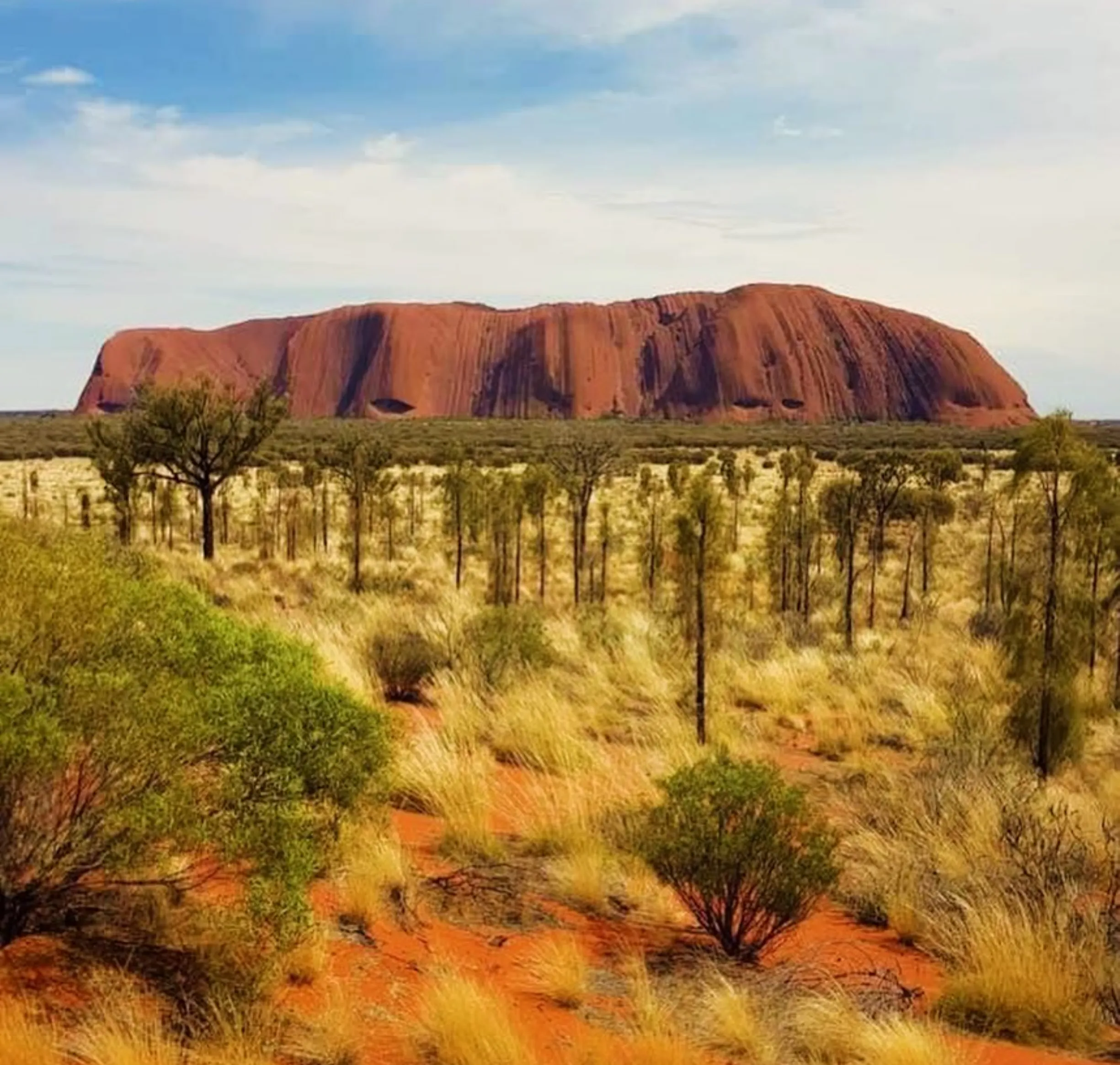
Uluru is made mostly of arkose sandstone — a rock type that has a high content of feldspar, a mineral that oxidises (yep, like rusting metal). That’s what gives it the rusty red tone we all know and love. But the real colour shifts come from the angle of the sun, moisture in the air, and the way light interacts with that surface.
Here’s what affects Uluru’s colour throughout the day:
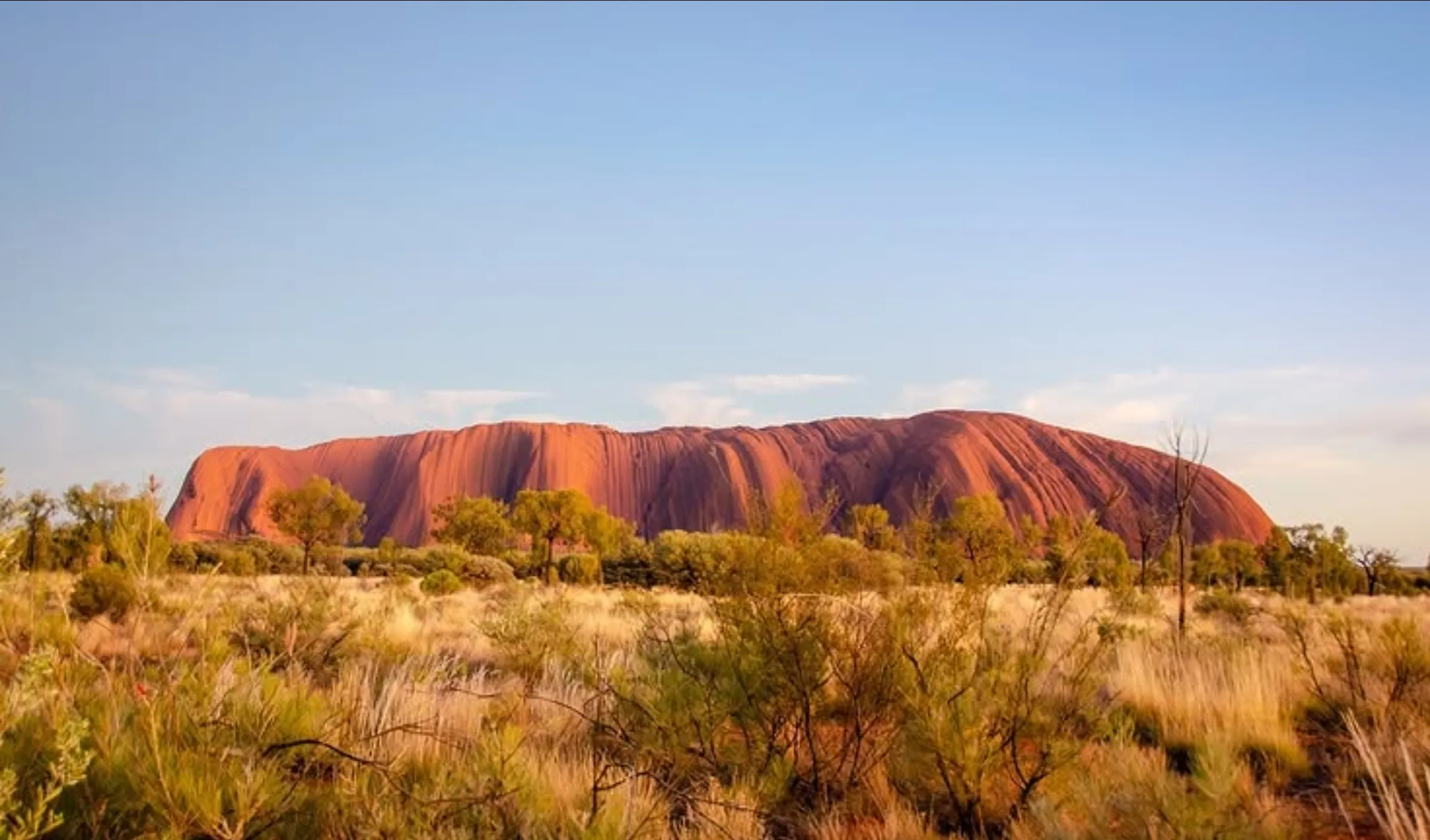
- Sun angle: Morning and evening light has longer wavelengths — that’s what gives you those rich reds and purples.
- Weather conditions: Clouds can mute or enhance colours, and heavy rains can make Uluru look darker, even purplish.
- Surface moisture: After rain, the rock can appear almost black — something most tourists don’t expect.
- Dust and haze: These can scatter light, adding golden or pinkish tones.
So no, it’s not a magic trick — it’s physics. But it feels like magic when you’re standing there watching it. On one of our recent trips with Autopia Tours, a guest stood silently for ten minutes as the whole rock went from dull brown to ruby red and whispered, “I didn’t think rocks could do that.”
Light and Time of Day
Here’s a rough guide to what colours you might spot, depending on the time:
Sunrise (5.30 am–7 am)
- Pink
- Pale orange
- Dusky lavender
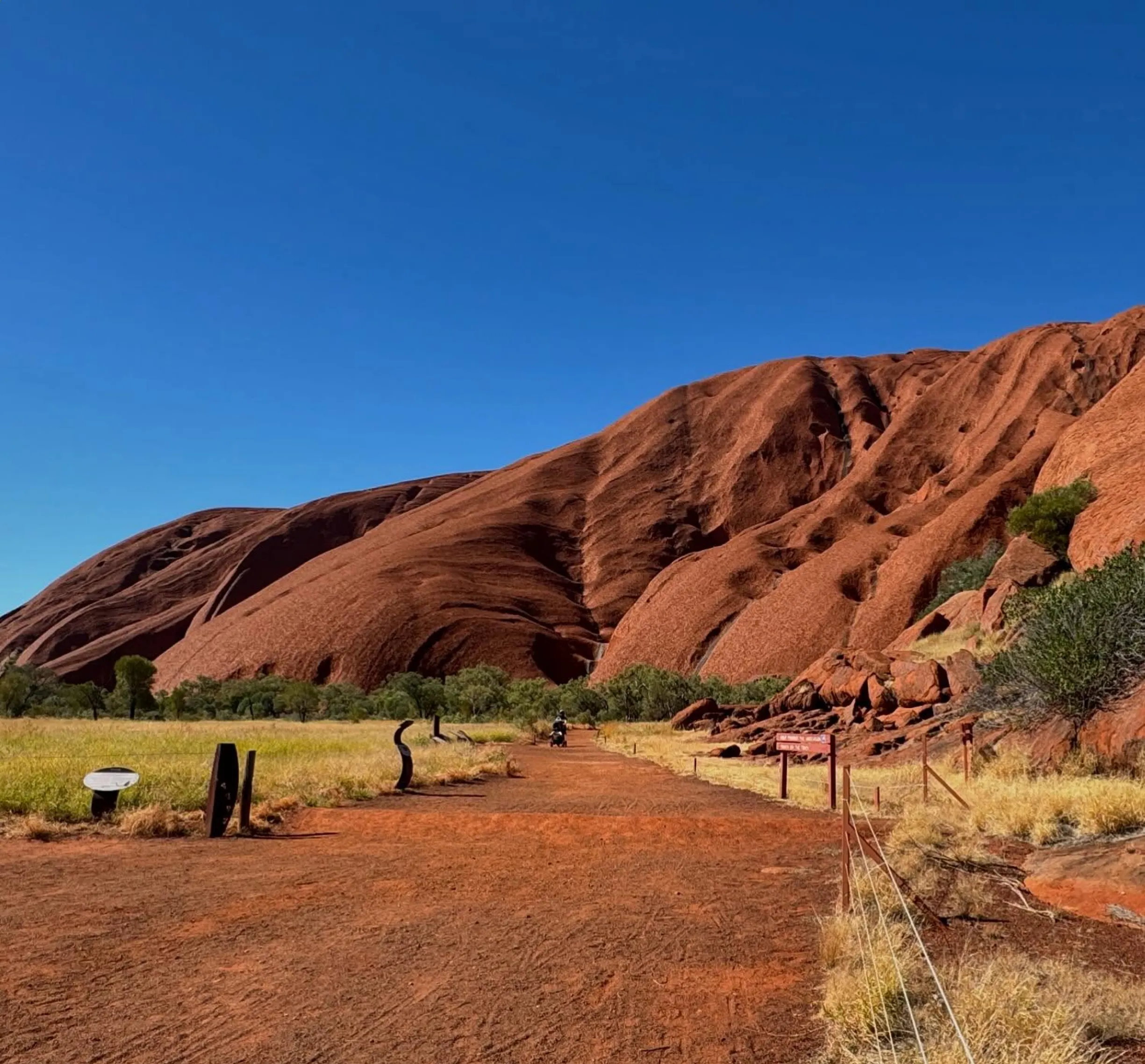
This is when the rock starts waking up. The first rays hit from the east and light up the top first. If there are clouds around, the colours can bounce back and paint the whole base in blush tones.
Midday (11 am–2 pm)
- Bright orange
- Sun-bleached red
- Chalky tan
Not the most photogenic time, but you’ll see Uluru’s “default” rusty colour most clearly. Bring a fly net — the midday mozzies are next level.
Sunset (5.30 pm–7 pm)
- Deep red
- Burnt ochre
- Violet-grey
This is peak photo time. Every tour bus in the NT lines up at the sunset viewing area. It’s still beautiful, but I reckon the real magic is when you find a quieter spot or watch it shift slowly from a nearby dune.
After rain
- Charcoal black
- Plum purple
- Streaky brown
One of the most surprising sights. After heavy rains (which do happen!), the rock darkens dramatically and water cascades down the sides in thin silver ribbons. It can get pretty muddy too — think proper mud after rain type of situation.
The cultural significance
Before we get too snap-happy, it’s important to remember that Uluru isn’t just a pretty rock — it’s a deeply sacred place for the Anangu people, the Traditional Owners.
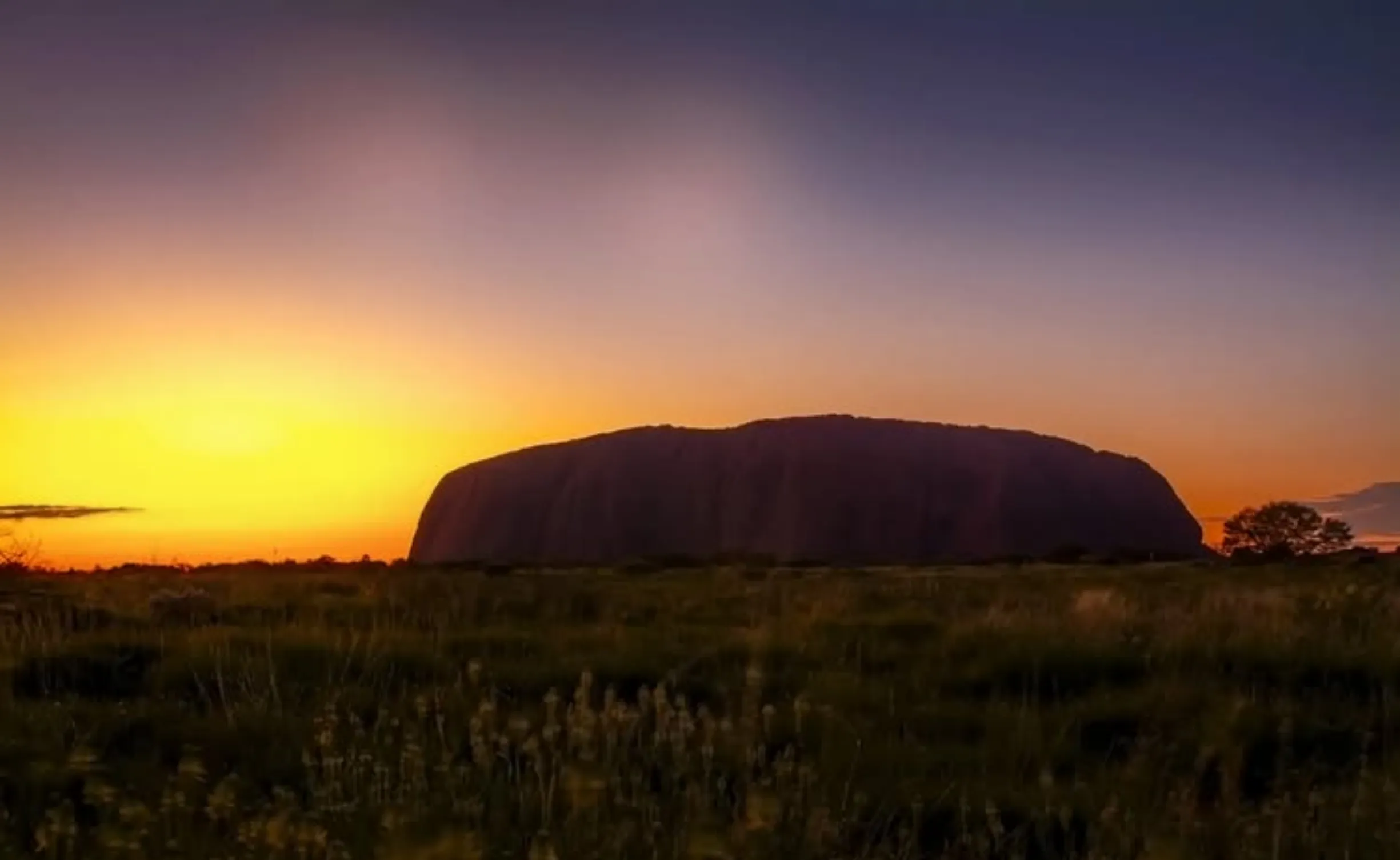
The changing colours of Uluru are part of its living presence. The Aboriginal people see the rock not as an object, but as an ancestor. Its colours reflect different aspects of its Tjukurpa — the Anangu word for Dreaming stories, law, and cultural knowledge. That means watching it shift isn’t just visual — it’s spiritual.
Some parts of the rock represent forms of people from those creation stories, frozen in stone since the creation period. And around its base, you’ll spot ancient paintings tucked in caves, some dating back tens of thousands of years.
Always treat Uluru with respect. Stay on marked paths, don’t climb it (it’s closed anyway, but still), and consider joining a guided cultural walk. We run one that’s led by local Anangu guides — and let me tell you, seeing Uluru through their eyes changes everything. Autopia Tours offers a brilliant cultural day experience that includes the base walk and a trip to the Cultural Centre.
Best spots to see colour changes
You don’t need a drone or fancy camera gear — just the right place and a bit of patience. Here are some tried-and-tested spots:
1. Talinguru Nyakunytjaku (sunrise platform)
With boardwalks, viewing decks and proper loo facilities, this is the official sunrise spot. You’ll get panoramic views of both Uluru and Kata Tjuta.
2. Car sunset viewing area
Good for an easy drive-up with your own snacks and chairs. Gets busy, so arrive early if you want front-row parking.
3. Dune Walk lookout
A bit quieter than the main areas, and a great angle for sunrise colours creeping across the desert floor.
4. Base walk (do it early!)
If you want to see the colours shift up close, do the full 10.6km base walk — just start before sunrise to beat the heat. Keep your eyes peeled for desert skinks, sand goannas, and even a few exotic plant species that somehow thrive in this tough country.
5. From the air (scenic flight)
Not budget, but breathtaking. Watching the light wash over Uluru from a helicopter is unforgettable. Some Autopia Tours itineraries even include optional scenic flight add-ons if you book ahead.
Best Season to Visit
Dry season (May–October):
- Cool mornings, clear skies — best for vivid sunrises and sunsets
- Peak visitor season, so book early
- Less average rainfall, but excellent for clear photography
Wet season (November–April):
- Hot, humid, stormy — colours can be dramatic
- Chance of waterfalls on Uluru after rain
- Expect high average rainfall and hot season heatwaves
I personally love the shoulder seasons — April and October. Less crowded, but still decent light and good weather. If you want the full dramatic range of colours, check out one of the Uluru day tours that times your visit for both sunrise and sunset.
Trip planning tips
Here’s what I tell people heading out for their first time:
- Give yourself at least 2–3 nights — the colours change every day!
- Book a sunrise tour for that first wow moment.
- Bring layers — mornings can be 5°C, afternoons 35°C.
- Carry water — even at sunrise, it’s dry as a dead dingo.
- Use a proper camera if you’ve got one — phones struggle with the contrast.
- Visit the tourist facility near the Cultural Centre for maps, updates and stories.
- Consider linking Uluru with Kings Canyon or Alice Springs as part of your wider Red Centre road trip. A popular option is the Alice Springs Uluru tour, which gives you the desert landscapes in full, from rocky gorges to ancient art.
- Short on time? A 2 day Uluru tour is a brilliant compromise — you get the magic without the burnout.
- Be present — don’t just view it through a screen. Trust me.
Final word: It’s not about the photo
Uluru will surprise you. Not just with its colours, but with its silence, its heat, its sheer presence. The colours are just one part of it — a living, breathing monolith that holds stories older than anything written down.
So yes, take the photos. But also sit. Watch. Listen. Let the colours of Uluru soak into your memory, not just your camera roll.
Got a favourite Uluru photo or a tip I missed? Drop it in the comments — I’m always updating my maps.
Oh — and one last fascinating detail? Uluru was originally sand compacted over millions of years until it became the arkose we see today. Another reason it’s got such serious conservation significance — it’s not just iconic, it’s fragile too.
If you’re keen to explore beyond the basics, there are plenty of Uluru tours that dig deeper into the cultural stories, bush foods, and wildlife around the rock. Just be sure to pick a small group option if you want a more intimate, slower-paced experience.
FAQ
What colour is Uluru at sunrise?
Uluru often glows soft pink, pale orange, and lavender at sunrise — it depends on the light, clouds, and season.
Why does Uluru change colour throughout the day?
Uluru’s sandstone surface oxidises, and the colours shift with sunlight angles, moisture, and atmospheric conditions.
What’s the best time of year to see Uluru’s colour changes?
The dry season (May–October) has clear skies for vivid colours. April and October are great shoulder-season options.
Can I visit Uluru on a day tour?
Yes, many Uluru day tours are available — perfect if you’re short on time but still want to catch the sunrise or sunset magic.
Is a 2-day Uluru tour enough?
Absolutely! A 2-day Uluru tour is ideal for those wanting a solid experience without the rush. You’ll see the rock in different lights and get time to explore nearby sites.
